Introduction to Lists: Managing Data Sequences in Python
Master Python lists to store ordered collections of data. Learn how to create, access, and modify list contents to build robust, data-driven applications.
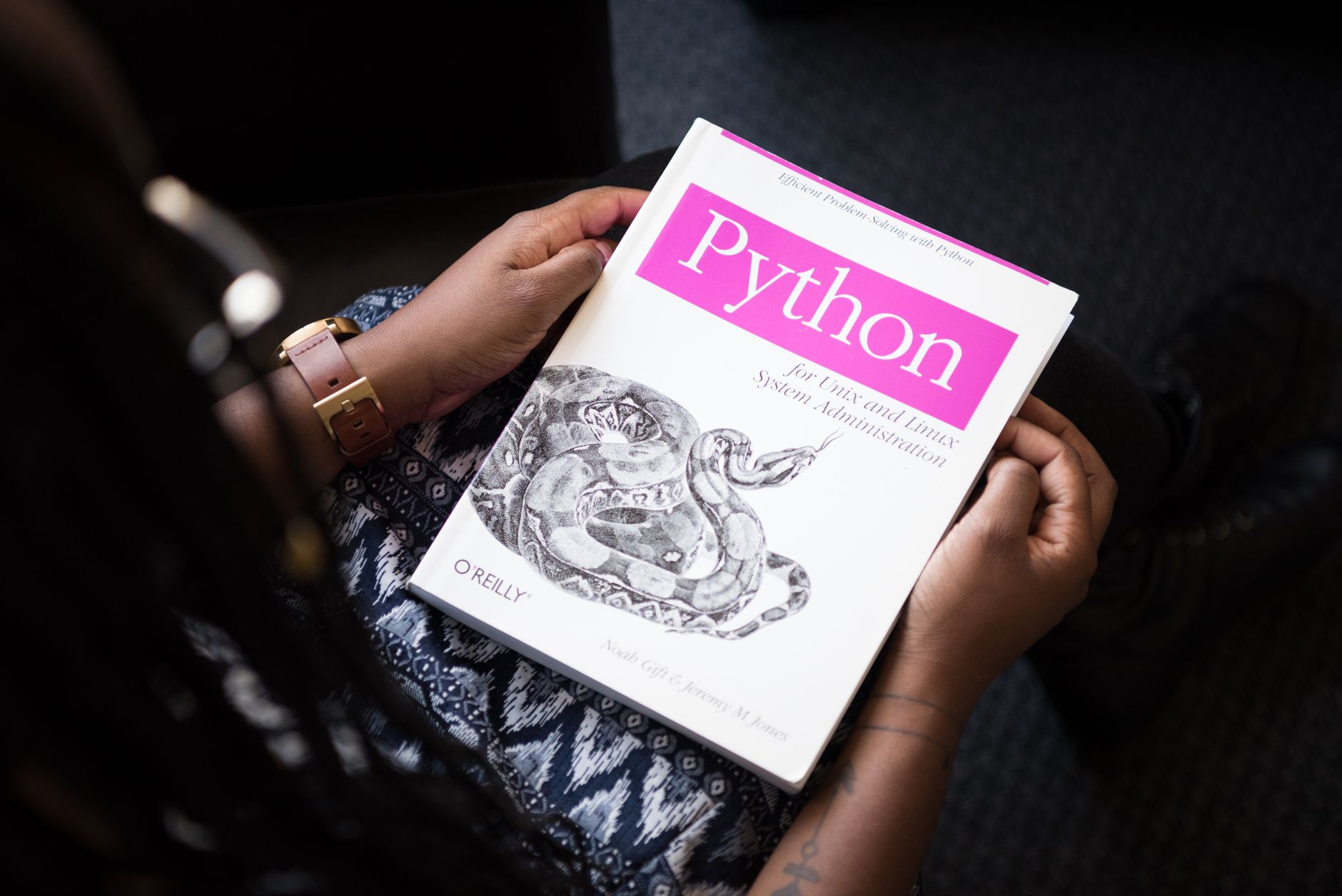
Previously in this course, we explored Boolean Logic and Comparisons and mastered For Loops to automate repetitive tasks. Until now, you’ve mostly worked with individual variables—storing one integer or string at a time. In real-world backend development, you rarely handle data in isolation. You need a way to store, group, and manipulate entire sequences of information.
That is where lists come in. Lists are the foundational data structure for ordered collections in Python, acting as the building blocks for everything from simple CLI logs to complex API payloads.
Understanding Lists from First Principles
A list is a mutable, ordered sequence of elements. Think of it like a shopping list or a queue at a checkout counter: the order matters, and you can add or remove items as you go.
Unlike basic types like integers or strings, a list is a container. It can hold any data type—even a mix of types—though in practice, you’ll usually store items of the same category to keep your data processing predictable.
Creating and Accessing Lists
You define a list using square brackets [] and separate individual elements with commas.
PYTHON# A simple list of strings
user_roles = ["admin", "editor", "viewer"]

# A list can hold numbers, strings, or even other lists
mixed_data = [101, "Server_A", 98.6]
To access specific elements, you use zero-based indexing. In Python, the first item is at index 0, the second is at 1, and so on.
PYTHONprint(user_roles[0])  # Output: admin
print(user_roles[2])  # Output: viewer
If you need to access items from the end, you can use negative indexing. [-1] always refers to the last element.
Modifying List Contents
Because lists are mutable, you can change their contents after they are created. This is vital for our project, where we might need to update a list of active users or process a queue of data entries.
PYTHON# Modifying an element
user_roles[1] = "guest"
print(user_roles)
# Output: [CE9178">'admin', CE9178">'guest', CE9178">'viewer']
Advancing Our Project

In our Data Collector CLI, we previously captured three distinct inputs. Now, instead of assigning them to three separate variables, we can store them in a single list. This makes our code cleaner and allows us to iterate over them later using loops.
PYTHON# Collecting user data into a list
user_entries = []

name = input("Enter username: ")
role = input("Enter role: ")
status = input("Enter status: ")

user_entries = [name, role, status]

print(f"Captured Profile: {user_entries}")
Hands-on Exercise
Create a file named list_manager.py. Initialize a list containing three programming languages you want to learn.
- Print the entire list.
- Access and print only the second language in your list.
- Replace the last language in the list with a new one.
- Print the updated list to verify the change.
Common Pitfalls
- Off-by-one errors: Remember that lists start at
0. Trying to accessuser_roles[3]in a list of three items will raise anIndexErrorbecause the valid indices are 0, 1, and 2. - Mutable assignment: Be careful when copying lists. Assigning one list variable to another (e.g.,
list_a = list_b) does not create a copy; it creates a reference to the same list in memory. Changing one will change both. - Type confusion: While Python allows
[1, "string", True], avoid mixing types unless absolutely necessary. It makes your code harder to debug and limits the operations you can perform on the list.
Frequently Asked Questions
Q: Can I put a list inside a list? Yes, this is called a nested list or a 2D list. It’s useful for representing grids or tables.
Q: How do I know how many items are in a list?
Use the len() function: length = len(user_roles).
Q: What happens if I try to access an index that doesn't exist?
Python will throw an IndexError: list index out of range. Always ensure your index is less than the length of the list.
Recap

Lists allow us to handle ordered collections of data efficiently. By using square brackets to create them, indices to retrieve specific items, and direct assignment to modify contents, we can manage dynamic datasets. Mastering these sequences is the first step toward handling real-world data structures like those found in Introduction to the Relational Model: Why PostgreSQL Wins.
Up next: We'll dive into powerful list methods, such as append, remove, and sort, to make our data management even more flexible.
Work with me

AI Automation & Agentic Workflow Development
Automate the repetitive work eating your time — content pipelines, data workflows, and agentic AI tasks that run themselves.
React & Next.js Dashboard / Admin UI Development
A clean, data-rich dashboard UI in React or Next.js — charts, tables, and real-time data that your users will actually enjoy using.