Shared Memory and IPC: Configuring High-Performance Docker
Master Inter-Process Communication (IPC) in Docker. Learn how to configure shared memory to boost performance for data-intensive applications.
Previously in this course, we covered automating image builds with CI/CD to streamline your deployment pipeline. This lesson takes a deeper look at the runtime environment, specifically how containers communicate via IPC (Inter-Process Communication) and how to leverage shared memory for performance-critical applications.
By default, Docker isolates containers to ensure security and stability. While this is great for standard microservices, high-performance applications—like databases, machine learning models, or data processing pipelines—often require low-latency communication that goes beyond standard network sockets.
Understanding IPC and Shared Memory
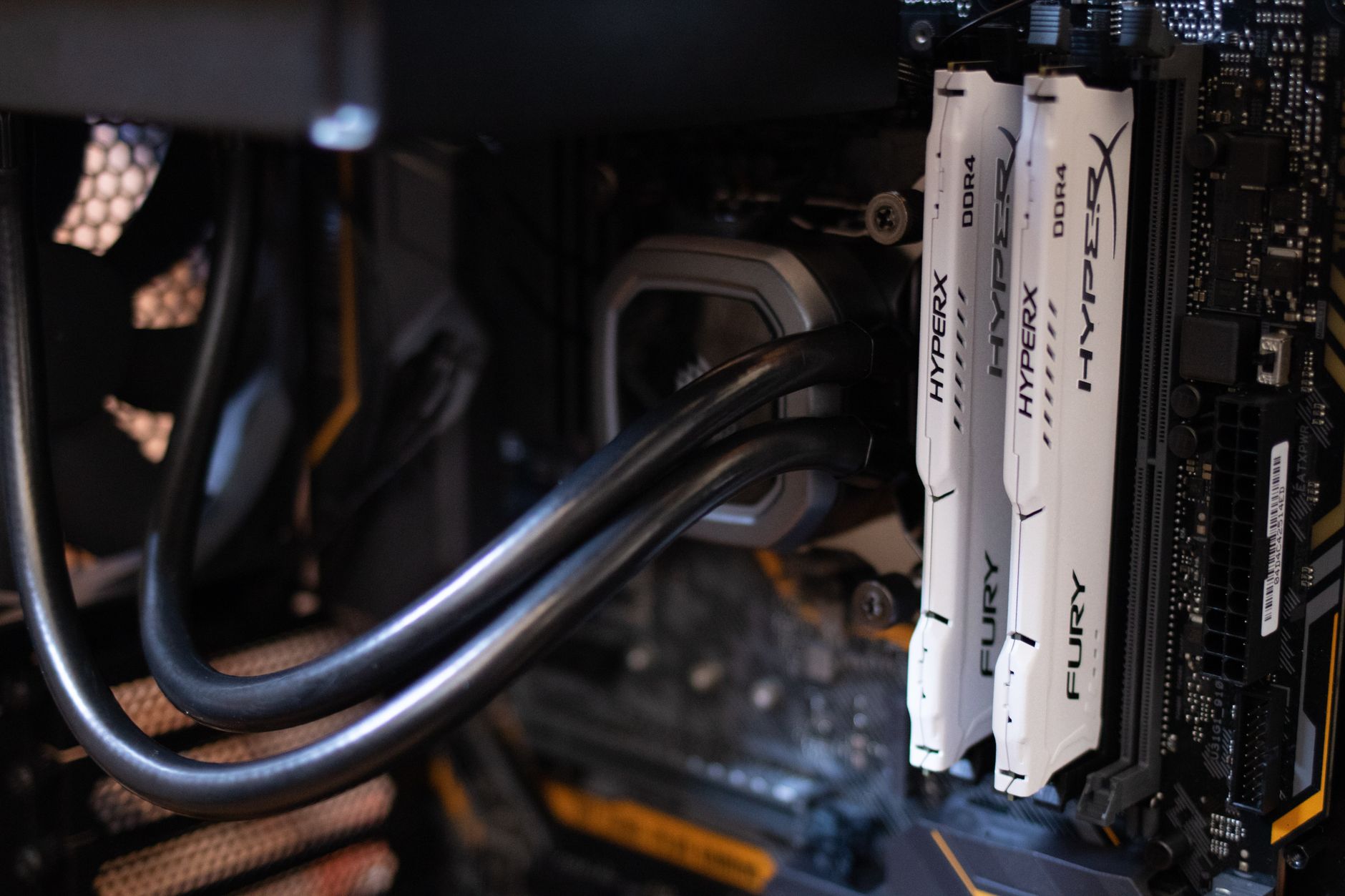
At the operating system level, IPC refers to the mechanisms that allow processes to manage shared data. When processes need to exchange large volumes of information quickly, they often use shared memory. Instead of copying data between process buffers (which is slow), they map a segment of physical RAM into their respective address spaces.
In a standard Docker container, the /dev/shm (shared memory) directory is limited to 64MB. If your application tries to allocate more than this, it will likely crash with a "Bus error" or an "Out of Memory" (OOM) exception.
Configuring IPC Modes in Docker
Docker provides the --ipc flag to control how containers share memory. Understanding these modes is critical for performance tuning:
private: The default. Each container gets its own isolated IPC namespace.shareable: The container can share its IPC namespace with other containers.container:<name|id>: The container joins the IPC namespace of another specified container.host: The container shares the IPC namespace with the host system. Use with caution, as this removes a significant layer of isolation.
Worked Example: Enabling Shared Memory for a Service
Imagine we are running a data-processing container that requires 512MB of shared memory to function without crashing. Since the default is 64MB, we need to increase the size. We do this by mounting a larger tmpfs volume over /dev/shm.
If we were running two containers that needed to communicate via shared memory, we would use the shareable and container modes:
YAML# docker-compose.yml
services:
  producer:
    image: data-processor:latest
    ipc: shareable # Allows others to join this namespace

  consumer:
    image: data-analyzer:latest
    ipc: container:producer # Joins the producer's IPC namespace
To increase the memory limit for a single container, use this syntax:
Bashdocker run --rm -d \
  --tmpfs /dev/shm:rw,nosuid,nodev,noexec,size=512m \
  my-high-perf-app:latest
Performance Implications
The primary benefit of using shared memory is the elimination of kernel-level copying. When your app reads from a socket, the data must traverse the kernel's networking stack. With shared memory, the process reads directly from the RAM segment, which is orders of magnitude faster.
However, there is a trade-off: Security. When you share an IPC namespace, you lose the isolation that prevents one process from accidentally corrupting the memory of another. Only use shared modes between trusted containers that you control.
Hands-on Exercise: Testing IPC
- Start a container and check the default size of
/dev/shm:docker run --rm alpine df -h /dev/shm - Start a container with a custom size and verify it:
docker run --rm --tmpfs /dev/shm:size=256m alpine df -h /dev/shm - Observe how the
sizecolumn changes in the output.
Common Pitfalls
- Assuming 64MB is enough: If you are running browser automation (like Selenium) or heavy numerical libraries (NumPy/PyTorch), 64MB is almost never enough. Always check your application's requirements.
- Security risks with
hostmode: Never use--ipc=hostunless absolutely necessary. It exposes the entire host's IPC namespace to the container, creating a massive security hole. - Zombie processes: If your application creates shared memory segments but doesn't clean them up on exit, you can leak memory. Always ensure your application handles signals correctly, as discussed in handling signals and graceful shutdowns.
FAQ
Q: Can I use shared memory between containers on different hosts? A: No. IPC and shared memory are local to a single kernel instance. For multi-host communication, you must use network-based protocols like gRPC or message queues.
Q: Why does my container crash when I use shared memory?
A: Check if the application has the correct permissions to write to /dev/shm or if the size limit is still too low for your specific workload.
Recap
We've explored how IPC isolation works in Docker and how to break that isolation when performance demands it. By using --tmpfs for size constraints or --ipc for namespace sharing, you can optimize your containers for high-throughput tasks. For more on managing data in your stack, refer to our guide on introduction to volumes.
Up next: We will look at Docker Desktop Extensions to add visual management tools to your workflow.
Work with me
CI/CD Pipeline & Docker Containerization
Ship with confidence: automated CI/CD pipelines and Docker setups so every push is tested and deployed — no more manual, error-prone releases.
VPS Server Setup, Deployment & Hardening
Get your app live on a fast, secure server — properly configured, hardened, and deployment-ready. No more wrestling with the command line.